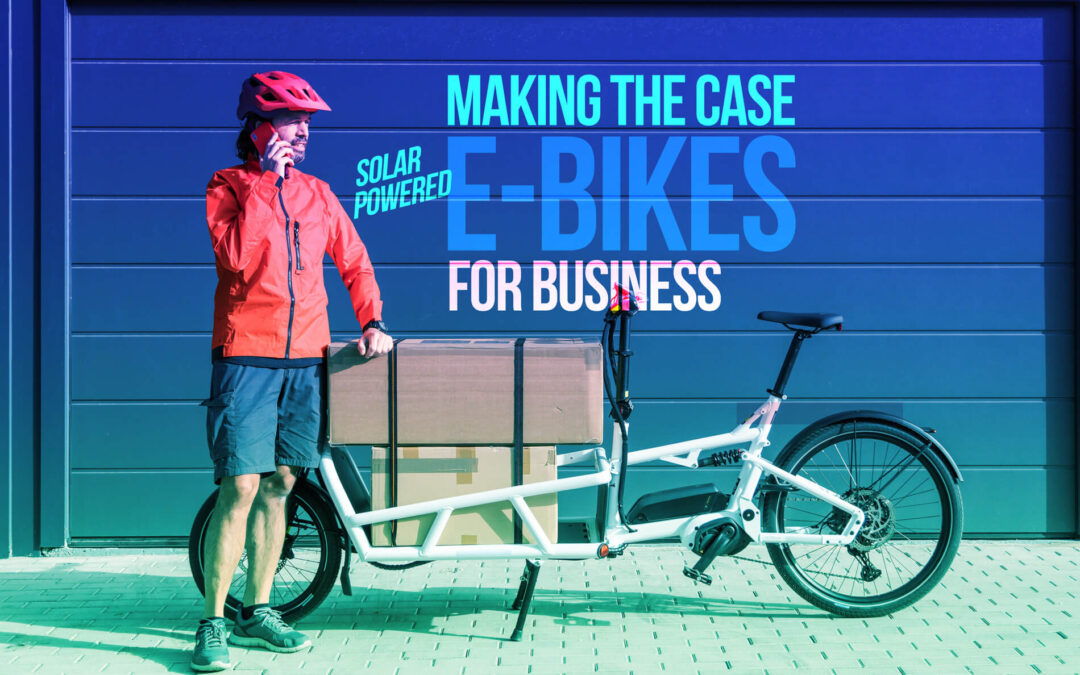
Un caso de negocio: Carga de bicicletas eléctricas con energía solar

Un caso de negocio: Carga de bicicletas eléctricas con energía solar

Consiga recarga solar para bicicletas eléctricas en su organización.

Con la creciente popularidad de las bicicletas eléctricas como medio de transporte limpio, ahora es posible reducir las emisiones de carbono y mejorar la sostenibilidad al tiempo que se promueve una vida sana. Pero cargar estas bicicletas eléctricas puede ser un reto, sobre todo por el coste y el impacto ambiental de la infraestructura de recarga.

Para aprovechar realmente las ventajas de las bicicletas eléctricas, es importante disponer de una forma fiable y rentable de cargarlas. Aquí es donde entra en juego el “Kit de argumentos comerciales” de Solarcycle, que ofrece un paquete completo diseñado para ayudar a crear argumentos comerciales internos a favor de la recarga de bicicletas eléctricas con energía solar.

Además, entendemos el proceso de financiación al que puede enfrentarse nuestro público. Nuestro

Kit de argumentos comerciales

es perfecto para incluirlo como parte de su solicitud de financiación subvencionable de programas locales, regionales o nacionales pertinentes, como la subvención de 10,3 millones de libras para la calidad del aire del DEFRA, destinada a
los ayuntamientos para prevenir la contaminación. El kit incluye una serie de herramientas y recursos para apoyar los beneficios medioambientales, financieros y de sostenibilidad organizativa de la instalación de cargadores SolarPoint para bicicletas eléctricas.

CALCULADORA COMERCIAL

Una de las principales características de este kit es la calculadora empresarial, que incluye estudios fiables y datos y cifras clave sobre el impacto ambiental de reducir las emisiones de CO2 sustituyendo los coches por bicicletas eléctricas. Esta herramienta permite a las empresas comprender las posibles ventajas medioambientales de pasarse a las bicicletas eléctricas, así como el ahorro de costes que puede suponer reducir la necesidad de coches.

CARTEL INFOGRÁFICO

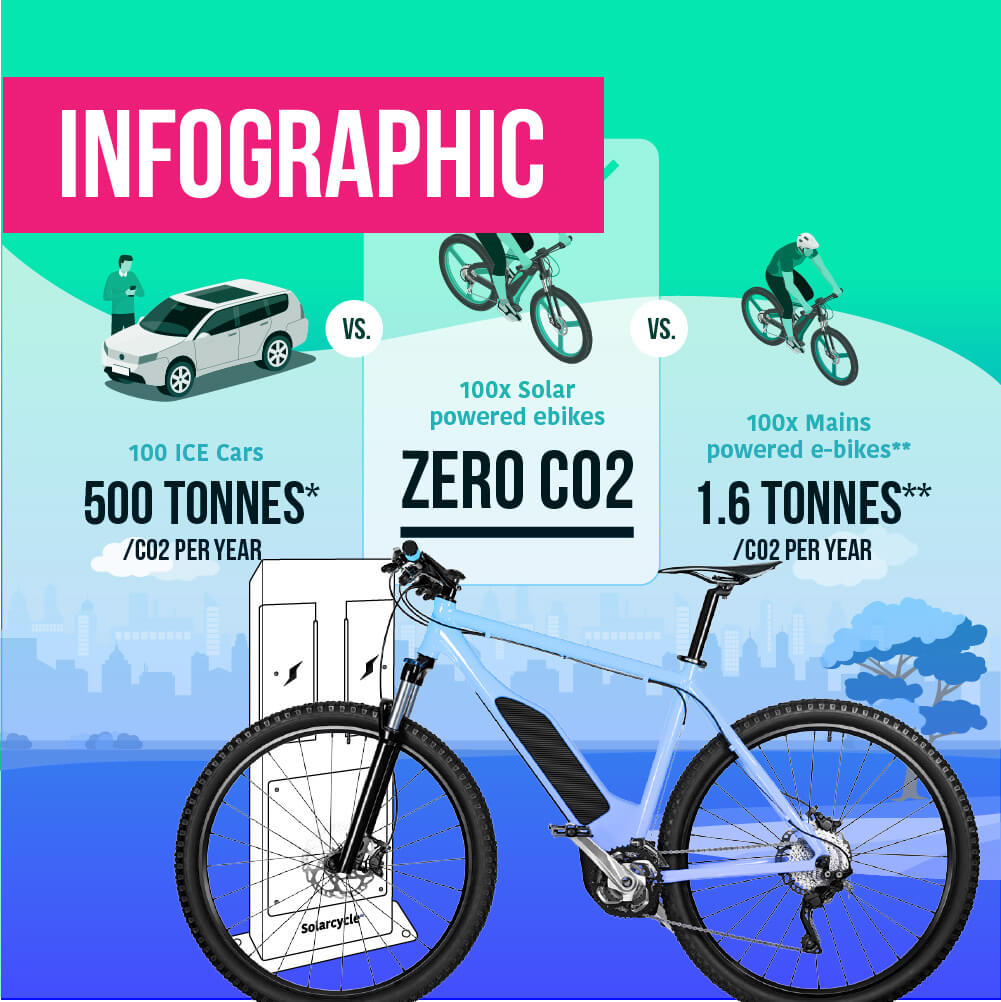
El póster infográfico de Solarcycle muestra las ventajas económicas de utilizar energía solar 100% renovable y gratuita para cargar bicicletas eléctricas en comparación con las estaciones de carga tradicionales conectadas a la red. La infografía también destaca el ahorro que las empresas pueden conseguir en costes de instalación, ya que SolarPoint elimina la necesidad de costosas obras en el suelo, que pueden suponer hasta el 60% de los costes de instalación.

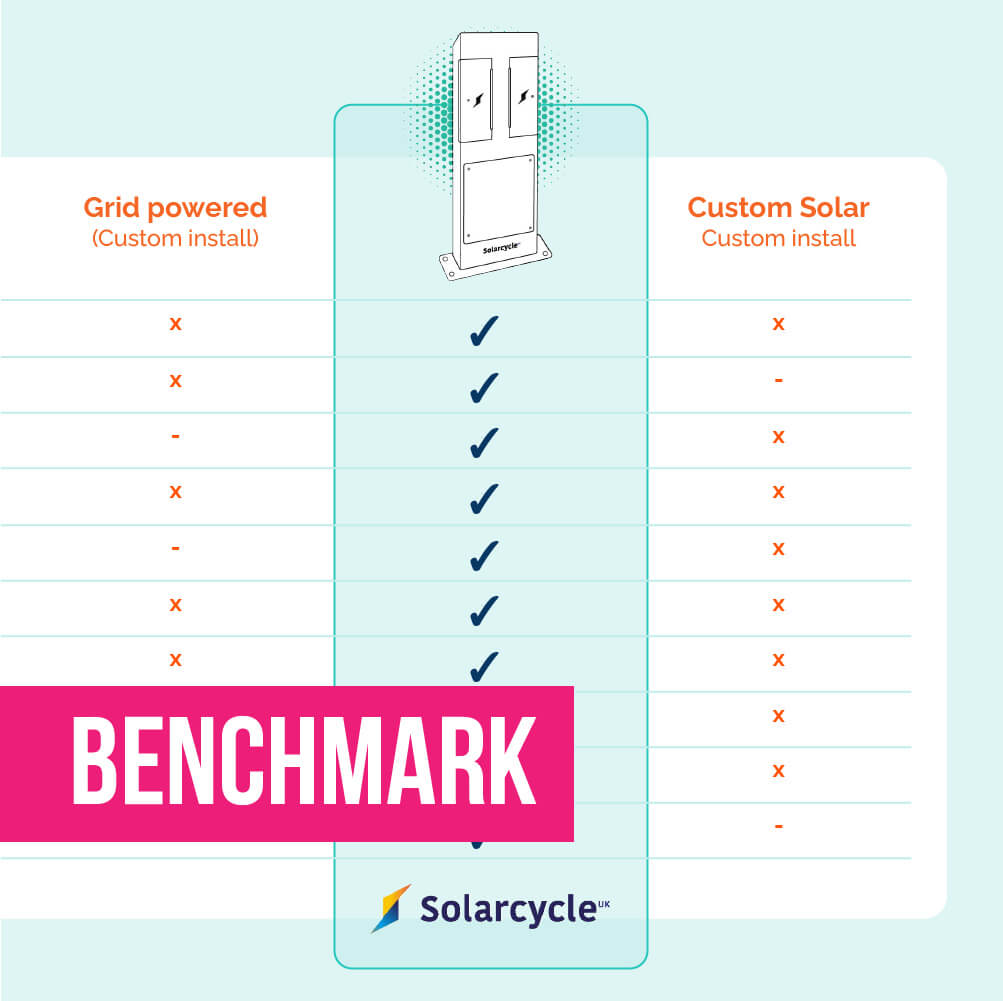
TABLA COMPARATIVA

La tabla comparativa de carga de e-bikes compara directamente las características clave de la carga tradicional de e-bikes conectada a la red con la carga solar de e-bikes diseñada a medida frente a Solarcycle. Esta comparación ayuda a las empresas a comprender las ventajas exclusivas de la solución de Solarcycle y cómo se compara con otras opciones del mercado.

HOJA DE DATOS

La hoja de datos SolarPoint de nuestra estación de carga escalable “Twin” para bicicletas eléctricas y paneles solares fotovoltaicos proporciona a las empresas una clara comprensión de las especificaciones técnicas de la solución de Solarcycle. Esto le permitirá planificar y preparar la instalación de estaciones de recarga para bicicletas eléctricas en su organización.

FOTOTECA

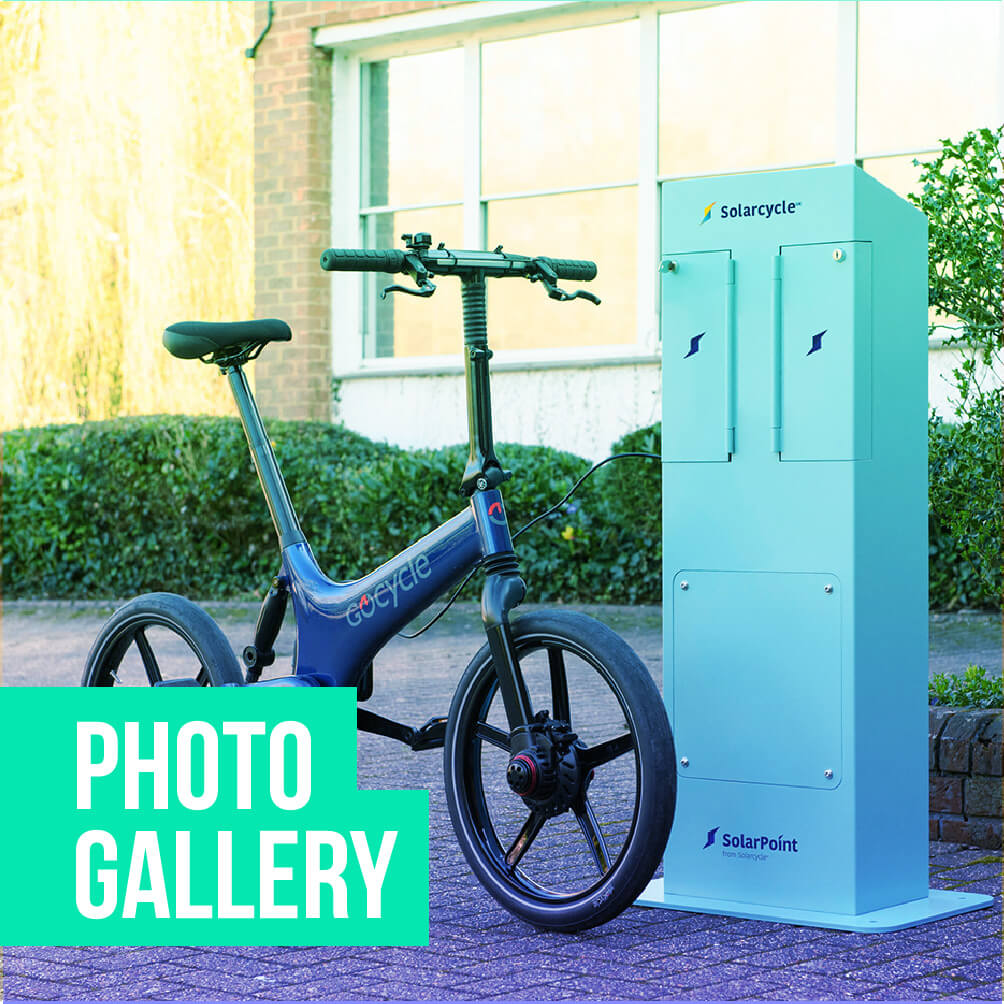
Las fotos de la solución de carga de bicicletas eléctricas con energía solar 100% renovable de Solarcycle ofrecen una representación visual del producto, ayudándole a ver cómo encaja en el entorno de su empresa y cómo puede beneficiar a las operaciones. Estas imágenes muestran la calidad y el diseño de la solución Solarcycle, lo que facilita a las empresas imaginar cómo encajaría la solución en su propio entorno.

CAPTURAS DE PANTALLA DE DATOS

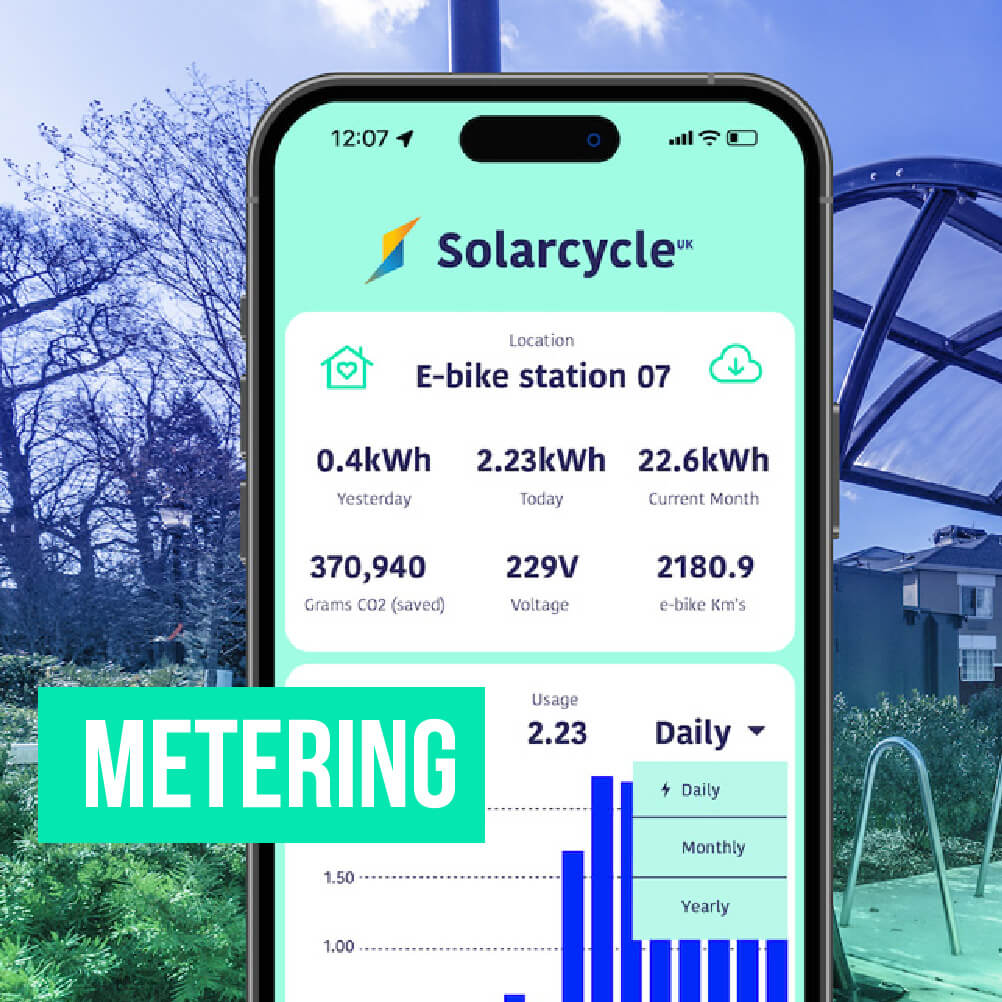
Por último, capturas de pantalla de la exclusiva función de informes de Solarcycle, que mide los kWh de energía solar 100% renovable y de uso gratuito dispensada como una función esencial para las empresas que desean medir el impacto de sus esfuerzos de sostenibilidad. Las organizaciones pueden seguir sus avances hacia sus objetivos de sostenibilidad y realizar los ajustes necesarios en su estrategia de tarificación. Solarcycle es el único sistema de carga solar para bicicletas eléctricas que ofrece esta característica, lo que lo convierte en un producto destacado en el mercado.

Para empezar, descárguese hoy mismo el “Kit de argumentos comerciales” de SolarPoint e introduzca en su empresa estaciones de recarga solar para bicicletas eléctricas.

Mediante la instalación de estaciones de carga para bicicletas eléctricas de Solarcycle, las empresas pueden reducir de forma significativa y demostrable sus emisiones de carbono. Las estaciones de carga solar de Solarcycle garantizan que las bicicletas eléctricas se carguen con energía renovable, lo que significa que las empresas pueden operar sus estaciones de carga sin emitir gases de efecto invernadero nocivos.

Al no tener costes energéticos continuos, las empresas pueden ahorrar dinero en sus facturas de energía, lo que la convierte en una opción rentable para las empresas que buscan ahorrar dinero al tiempo que reducen su huella de carbono. Además, el bajo coste de instalación de las estaciones de carga para bicicletas eléctricas de Solarcycle las convierte en una opción rentable para cualquier empresa u organización que quiera ser ecológica.

Las empresas que instalan las estaciones de carga para bicicletas eléctricas de Solarcycle pueden reducir significativamente (y de forma demostrable ) sus emisiones de carbono.

Más allá de las ventajas medioambientales y económicas de la recarga solar de bicicletas eléctricas, animar a los empleados a utilizarlas en lugar de coches o autobuses puede reportar importantes beneficios para la salud y la organización. Está demostrado que el ejercicio regular mejora la salud mental, reduce el estrés y aumenta la productividad. Con las bicicletas eléctricas, los empleados pueden disfrutar de un ejercicio de bajo impacto mientras se desplazan al trabajo, mejorando su salud general, su bienestar y su productividad.

Las ventajas de instalar estaciones de carga para bicicletas eléctricas de Solarcycle son evidentes. Sin costes energéticos continuos, con bajos costes de instalación, ahorros financieros y beneficios de sostenibilidad, es una excelente opción para las empresas que buscan reducir su huella de carbono al tiempo que ahorran dinero. Para empezar, descárguese hoy mismo el “Kit de argumentos comerciales” de SolarPoint y lleve a su organización estaciones de carga de bicicletas eléctricas alimentadas con energía solar. Trabajemos juntos para hacer del mundo un lugar más verde, sano y sostenible.


 

Descubra cómo el personal de Ashford and St Peter’s está transformando los desplazamientos diarios del personal del NHS ➔

Carga de bicicletas eléctricas con energía solar

Going the Extra Mile: Why Incorporating E-Bikes is Key to Boosting Organisational Sustainability

Going the Extra Mile: Why Incorporating E-Bikes is Key to Boosting Organisational Sustainability

Going the Extra Mile:

Why Incorporating
E-Bikes is Key to
Boosting Organisational Sustainability

The UK has pledged in law to get to net-zero carbon emissions by 2050 …

Surface transport alone now represents 27% of the UK’s total domestic greenhouse gas emissions, making it the number one source of CO2. To get to net-zero, we need to rethink how we travel. With the Government’s Net Zero 2050 cycling sustainability aims, e-bikes will have an important role to play in making this goal achievable.

As companies and organisations put in place sustainability and ‘green’ plans, many are looking for ways to reduce their carbon emissions. One effective way to do this is by adopting e-bikes for employees and their transport fleet. First and foremost, e-bikes are an environmentally friendly mode of transportation. 

According to the European Cyclists’ Federation, buses emit 101 grams of CO2 per passenger-km, cars emit 271 grams, while e-bikes emit 22 grams per passenger-km. When charged with renewable solar energy from Solarcycle, they produce zero emissions, and they require less energy to operate than traditional vehicles. 

E-BIKE =

22 Grams CO2

BUS =

101 Grams CO2

CAR =

271 Grams CO2

[E-bikes] When charged with renewable solar energy from Solarcycle, produce zero emissions, and require less energy to operate than traditional vehicles.

By incorporating e-bikes into their transport fleet, companies can significantly reduce their carbon emissions and contribute to a cleaner, greener environment. In promoting the use of e-bikes, companies can encourage sustainable transportation and reduce their reliance on fossil fuels. This is particularly important considering the urgent need to transition to a low-carbon economy.

Furthermore, e-bikes can be a cost-effective solution for companies looking to reduce transportation costs. E-bikes are cheaper to operate, so by replacing cars with zero emission e-bikes, companies can save money on fuel and maintenance costs, while also contributing to a more sustainable future. Several companies have already adopted e-bikes as part of their transportation fleet. For example, DHL Express has deployed over 14,000 e-bikes in 58 countries worldwide. The company has reported that e-bikes have reduced carbon emissions by up to 16,000 tons per year, as well as reduced transportation costs and achieved a 14% increase in delivery efficiency. Similarly, Amazon has invested in e-bikes to reduce the carbon footprint of its delivery operations.

Another advantage of e-bikes is that they can help organisations improve their corporate image. The recent Mintel Sustainability Barometer Report shows 36% of consumers surveyed believe companies are ultimately responsible for reducing emissions from vehicles. Adopting e-bikes as a sustainable mode of transportation demonstrates a commitment to environmental sustainability and corporate responsibility. Customers, stakeholders, and employees are increasingly concerned about sustainability, and companies that prioritise sustainability are more likely to attract and retain customers and employees.

According to the European Cyclists’ Federation, buses emit 101 grams of CO2 per passenger-km, cars emit 271 grams, while e-bikes emit 22 grams per passenger-km.

As companies look to reduce their carbon footprint and increase their corporate responsibility, it’s time to consider the adoption of e-bikes for employee transportation and fleet operations. By making this switch, your company can take significant steps towards achieving net-zero emissions, while also demonstrating a commitment to sustainability and social responsibility. By investing in e-bikes, you can not only contribute to a cleaner environment but also create a more sustainable future for your business.

The environmental benefits and cost breaks e-bikes provide are undeniable. With e-bikes as a sustainable mode of transportation, we can move closer to a cleaner, healthier, and more sustainable future.

So, if you’re ready to take action towards a net-zero future and make a measurable positive impact on your community and the environment, start by fully exploring the potential of e-bikes and solar e-bike charging as part of your sustainability strategy for your company today.

Solarcycle.UK recibe el premio al transporte más inteligente en los Crest Business Awards.

Solarcycle.UK galardonada con el prestigioso premio Smarter Transport en los Crest Business Awards celebrados en el Living Planet Building de WWF-UK en Woking el 26 de noviembre de 2023.

Solarcycle.UK Scoops Award for Smarter Transport at Crest Business Awards.

Solarcycle.UK honoured with prestigious Smarter Transport award at Crest Business Awards held at WWF-UK’s Living Planet Building in Woking November 26th, 2023.

The enormous benefits of the Cycle to Work Scheme

With the Green Commute Initiative (GCI), the Cycle to Work scheme is quick and easy to use, saving 32 – 47% on a new bike and accessories AND 13.8% NIC as employers. Solarcycle Guest Blog

Las enormes ventajas del programa “Ir en bicicleta al trabajo

Con la iniciativa Green Commute Initiative (GCI), el programa Cycle to Work es rápido y fácil de usar, y permite ahorrar entre un 32% y un 47% en una bicicleta nueva y accesorios Y un 13,8% de NIC como empleador. Solarcycle Blog Invitado

Gear Up with These Cool Gadgets for Cyclists and E-Bikers

Cool Gadgetsfor Cyclists and E-Bikers Here at Solarcycle, we are passionate cyclists. Are you a cycling or e-biking enthusiast who loves exploring new routes, taking in scenic views, or simply commuting to work on two wheels? Well, we've got you covered with a...

Equípate con estos geniales artilugios para ciclistas y ciclistas electrónicos

Gadgets genialespara ciclistas y E-Bikers En Solarcycle somos ciclistas apasionados. ¿Es usted un entusiasta del ciclismo o del e-biking y le gusta explorar nuevas rutas, disfrutar de vistas panorámicas o simplemente desplazarse al trabajo sobre dos ruedas? Te...

BikeFlex Partners with Solarcycle to Revolutionise E-Bike Charging

[PRESS RELEASE] BikeFlex Partners with Solarcycle to RevolutioniseE-Bike ChargingIn a ground-breaking move towards sustainability, e-bike leasing company BikeFlex has joined forces with Solarcycle UK to provide 100% renewable solar e-bike charging under its business…

BikeFlex se asocia con Solarcycle para revolucionar la recarga de bicicletas eléctricas

[PRESS RELEASE] BikeFlex se asocia con Solarcycle para revolucionar la recarga de bicicletas eléctricasEn un movimiento pionero hacia la sostenibilidad, la empresa de alquiler de bicicletas eléctricas BikeFlex ha unido fuerzas con Solarcycle UK para ofrecer recarga solar 100% renovable para bicicletas…

Time to Switch from a Car to an E-bike

Why Now is the Time to Switch from a Car to an E-bikeThe country is witnessing a growing wave of e-bike enthusiasts, and for good reason.  With concerns over the rising cost of living, environmental impact, and the need for sustainable transportation, it's becoming...

Es hora de cambiar el coche por la bicicleta eléctrica

Por qué es el momento de cambiar el coche por la bicicleta eléctricaEl país es testigo de una creciente oleada de entusiastas de las bicicletas eléctricas, y con razón. Ante la preocupación por el aumento del coste de la vida, el impacto ambiental y la necesidad de un...

How Riding an E-Bike Can Boost Employee Wellness and Productivity

How Riding an E-Bike Can Boost Employee Wellness and Productivity

HOW: Riding an E-Bike Can Boost Employee Wellness and Productivity

Riding an e-bike is a fun and convenient way to get around, but did you know that it also has numerous health benefits for employees?

In addition to reducing the carbon footprint and saving money on transportation costs, e-biking has been shown to have positive effects on both physical and mental health. Recent studies highlight the benefits of e-bike use as one specific way to change commuter habits and in turn to improve health and well-being among urban and regional populations.  Let’s take a closer look at the health benefits of riding an e-bike for employees.

Physical Health Benefits
Travel is an essential part of everyday life for most people, and the adoption of active travel represents an efficient way to increase daily physical activity. Due to a growing body of evidence, the UK National Institute of Health and Care Excellence (NICE) now endorse active travel, with a particular focus on commuting, as a feasible method to incorporate physical activity into daily life to improve public health.

One of the most obvious benefits of riding an e-bike is the physical exercise it provides. To stay healthy, the UK Chief Medical Officers’ Physical Activity Guidelines state that adults should try to be active every day. Over a week, activity should add up to at least 150 minutes (2½ hours) of moderate intensity activity in bouts of 10 minutes or more – one way to approach this is to commute by e-bike.


Due to a growing body of evidence, the UK National Institute of Health and Care Excellence (NICE) now endorse active travel, with a particular focus on commuting, as a feasible method to incorporate physical activity into daily life to improve public health.

While e-bikes provide assistance with pedalling, they still require the rider to exert effort and pedal. This can help employees stay active and increase their daily physical activity levels, which has numerous benefits for overall health. Studies have shown that regular exercise can help reduce the risk of chronic conditions such as heart disease, obesity, diabetes, and even certain types of cancer.

Furthermore, riding an e-bike can be easier on the joints and muscles compared to traditional biking, as the motor assistance can help reduce strain and fatigue. This makes e-bikes a great option for those who may have physical limitations or injuries that make traditional biking difficult. It can also help with weight management and improve overall fitness.

the average UK worker takes 4.5 sick days a year; the average cyclist just 2.4 sick days a year.

Mental Health Benefits
In addition to the physical benefits, riding an e-bike can also have positive effects on mental health. One study examining the health benefits of electrically assisted cycling found that participants who regularly rode e-bikes reported decreased stress levels and increased feelings of well-being. The theme ‘mental well-being’ emerged from the participants’ descriptions concerning the positive effect of riding an e-bike. This is likely due to the combination of exercise, fresh air, and the feeling of freedom and control that comes with riding a bike. Exercise has been shown to improve mood and reduce symptoms of anxiety and depression. This is because exercise releases endorphins, which are chemicals that make us feel good.

Commuting can be stressful, but riding an e-bike can provide a more enjoyable and less stressful alternative to driving or taking public transport. Being outdoors and getting fresh air can also have positive effects on mental health. Moreover, e-biking can be a great way to incorporate mindfulness into a daily routine. Mindfulness involves being present in the moment and paying attention to the surrounding environment. When riding an e-bike, employees can focus on the experience of biking, taking in the scenery and enjoying the ride, which can help reduce stress and anxiety.

Productivity Benefits
Studies have shown that regular exercise can boost cognitive function and improve focus and concentration. Riding an e-bike for carbonless commuting can help employees stay fit, reduce stress levels, and improve mental clarity. In turn, these benefits can help employees be more productive at work by increasing energy levels, improving focus, and reducing sick days. According to research by Sustrans, the average UK worker takes 4.5 sick days a year; the average cyclist just 2.4.

Additionally, riding an e-bike can help employees save time and avoid traffic, making them more punctual and reducing stress associated with being late. This can also improve work productivity, as employees who are less stressed and more punctual are generally more productive. With an e-bike, employees can save on fuel costs, parking fees, and public transportation fees. This can free up extra funds that employees can use to invest in their career or personal growth.

Riding an e-bike to work can provide a range of health and productivity benefits for employees. From timesaving to improved physical and mental health, e-bikes offer a cost-effective and eco-friendly way to commute that can help employees be more productive, efficient, and focused in the workplace. As such, employers may want to consider offering e-bike incentives and amenities, such as free-to-use solar e-bike charging, to help their staff make the most of this clean and carbonless commuting option.


Discover how staff at Ashford and St Peter’s are transforming the daily commute for NHS Staff ➔

How Employers Can Promote E-bike Adoption

How Employers Can Promote E-bike Adoption

How
Employers
Can Promote
E-bike Adoption

There are many obvious reasons why employers should encourage their employees to adopt e-bikes for the benefit of the organisation and staff.

E-bikes are the perfect tool to attract many people, who don’t want to be a cyclist, out of the car.

  • Cost savings: E-bikes can be a cost-effective mode of transportation, reducing the costs associated with car ownership, such as fuel, parking, and maintenance expenses.
  • Improved health: E-bikes provide an opportunity for employees to get physical activity, reducing the risk of health problems associated with sedentary lifestyles.
  • Increased productivity: By reducing stress levels and improving overall health, e-bikes can increase employee productivity and satisfaction.
  • Reduced traffic and delays: Travelling by bike avoids traffic delays, so commuters arrive on time and leave the roads for cars who need to be there.
  • Reduced environmental impact: E-bikes produce significantly fewer emissions than traditional vehicles, especially when they are powered by the sun, helping organisations to reduce their carbon footprint and contribute to a more sustainable future.
  • Attraction and retention of employees: By promoting e-bikes, organisations can show that they care about their employees’ health and well-being and may be more attractive to environmentally conscious employees.

According to a recent report by Shimano, examining the attitudes towards e-bike usage, economic factors are seen as the strongest encouragement for buying or using an e-bike more.

 Employers can implement various initiatives and programmes to help their staff switch to carbonless commuting with an e-bike. Providing financial incentives, such as tax benefits, subsidies, or bonuses, for employees who choose to commute via e-bike are seen as the most important factor. According to a recent report by Shimano, examining the attitudes towards e-bike usage, economic factors are seen as the strongest encouragement for buying or using an e-bike more. On average across Europe, 47% see the cost of living as primary motivation and 41% see purchase subsidies as an encouragement to more e-bike use.

Other benefits employers can offer are the provision of secure and convenient bike storage and free-to-use charging facilities for staff who use e-bikes. Allowing flexible work hours to accommodate the needs of e-bike commuters who may need to arrive a little earlier or later due to their mode of transportation. Partnering with local e-bike dealerships to offer discounts and special promotions to employees.

Encouraging the use of e-bikes by setting an example and promoting them as a sustainable and cost-effective mode of transportation. Offering training and support to employees who are new to e-bikes, such as safety training, maintenance workshops, cycling clubs and organised ride events. By promoting e-bike use, employers can help their staff save money, improve their health, and reduce their carbon footprint, ultimately leading to a more sustainable and cost-effective mode of transportation.

Helping employees to adopt e-bikes can have numerous benefits for both the employees and the organisation. Incentives not only make it easier for employees to adopt e-bikes, but they also show that the organisation is committed to promoting sustainable and healthy modes of transportation. By implementing such incentives, employers can create a more productive and engaged workforce while also helping to reduce their environmental impact. So, if you are an employer looking to promote e-bike adoption among your employees, you need to put in place the right incentives that make the transition easier and more appealing.

According to the Bicycle Association, the evidence shows that around half of all trips by e-bike replace a trip that would have been made by car. The time is right therefore for employers to kick-start e-bike uptake with the right incentives and be part of the wider clean transport revolution.


Helping employees to adopt e-bikes can have numerous benefits for both the employees and the organisation.

E-Bikes: As an Affordable Solution to the Cost of Living Crisis

E-Bikes: As an Affordable Solution to the Cost of Living Crisis

E-Bikes: As an Affordable Solution to the Cost of Living Crisis

As the cost of living continues to rise, more people are searching for ways to cut expenses and save money.

A recent survey published by Mintel confirmed that 55% of respondents pointed to petrol/diesel costs, alongside steady increases in public transport bills as a reason to consider the switch to e-mobility.

E-bikes offer significant savings on commuting and transport costs as an alternative to running a car. With the ability to travel further distances than a traditional bicycle, without the need for car maintenance, e-bikes offer an obvious solution to the cost of living crisis. E-bikes are not only helping people save money and live more sustainable lives, but they also have the potential to significantly reshape the transportation landscape.


Here are the key benefits of e-bikes to consider for the cost-conscious consumer:

  • Lower operating costs compared to a car with reduced spending on fuel, maintenance, parking costs, insurance, and repairs.
  • Easier and more affordable transportation for commuting, running errands, and other everyday activities.
  • Improved access to job opportunities: e-bikes can provide people with a reliable and affordable means of transportation, which can improve access to job opportunities, especially for those living in urban areas with high transportation costs.
  • Better health: Regular cycling can help to improve health and reduce healthcare costs, providing a long-term cost benefit to individuals and society as a whole.
  • Reduced dependence on fossil fuels: by using renewable energy sources, such as batteries and solar e-bike charging stations, e-bikes can reduce dependence on fossil fuels.

At Solarcycle, we urge consumers, policymakers, employers and other stakeholders to consider the benefits of e-bikes and to embrace them as a viable option for a more affordable and sustainable future.

As more people recognise the benefits of e-bikes, the adoption of this mode of transportation is likely to increase, making it an important part of the solution to the cost of living crisis. At Solarcycle, we urge consumers, policymakers, employers and other stakeholders to consider the benefits of e-bikes and to embrace them as a viable option for a more affordable and sustainable future.

For consumers, we encourage you to think about the potential savings that e-bikes can offer over cars and public transport, and to give them a try as a way to get around. For policymakers, we ask that you prioritise policies that support e-bikes, including dedicated bike lanes and tax incentives for e-bike purchases. Employers can play a crucial role by providing free-to-use e-bike charging facilities and infrastructure for their employees. By doing so, they not only encourage sustainable transportation options but also promote a healthier lifestyle for their staff. Finally, for other stakeholders, such as urban planners and developers, we encourage you to consider the important role that e-bikes can play in creating more sustainable and liveable communities.

Together, we can work towards a future where e-bikes are a mainstream mode of transportation, helping to reduce our reliance on cars, improve our quality of life, and create a more sustainable, healthier, and equitable future for all.

55% of respondents pointed to petrol/diesel costs, alongside steady increases in public transport bills